Current Books We Are Reading. . .
The Art of Video Games: From Pac-Man to Mass Effect
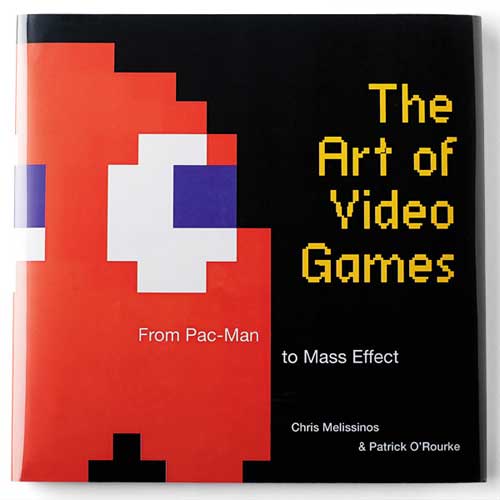 This is a beautiful book! It contains high quality images of the games we not only loved to play but loved to read about and look at.
It is fair to say that there is a lot of beauty and art in the games we play - from the storytelling, the art work and the music.
This is a beautiful book! It contains high quality images of the games we not only loved to play but loved to read about and look at.
It is fair to say that there is a lot of beauty and art in the games we play - from the storytelling, the art work and the music.
"There is beauty in the pixel. Beyond the game, in the crease of the scanline. In these points of light, art is born."
- Chris Melissinos.
The games examined in this book come from the effort of the Smithsonian American Art Museum exhibition in exploring video games as an art form that reflects our culture.
Unlike other art forms a video game is unique in that it has the designer, the artists, the musicians, the programmers all working creatively and in different ways to create the video game itself. And of course the game player brings their own experience, knowledge, thoughts and ideas in the "playing" of the game!
There are many games featured in the book that match our expectations for great playing games - Space Invaders, Pac-Man, Mario World. But there are many more games that were new an unexpected to me. There is Zaxxon which I never see in any top-ten list but was an amazing game when you think about the effort to create the illusion of depth and 3D given the limitations of the computers for that time. The book details other popular game systems and the games on those systems that were notable
- ColecoVision - Star Trek: Strategic Operations Simulator, Pitfall II: Lost Caverns
- Intellivision - Star Strike (1981), TRON: Maze-a-Tron, Utopia (the book also has an interview with the designer Don Daglow)
- C64 - Jumpman, Attack of the Mutant Camels, Sid Meier's Pirates!
This is a wonderful table top book to explore, enjoy, talk about and reminisce with friends over.

Eclipse - Building Commercial-Quality Plug-ins
 I thought it was going to be easy to create my own Java Game Project Wizard to handle the game/graphics projects I want to create for my Java 2D platformer projects but alas like most things it was not. I started reading some stackoverflow questions and answers and discovered I would need to improve and enhance my understanding of plugins. So I decided to take the dust off the book - Eclipse - Building Commercial-Quality Plug-ins and finally get to reading it and completing it. I will post my notes while I go through the book so that others may benefit or learn from my own experience and post or send me your thoughts. The first chapter takes the reader through the key features provided by Eclipse - Installation, The Workbench - perspectives, views, and editors, Setting up preferences, creating a project, navigating, searching, writing code, team development using CVS, running applications and how to debug and test. The next chapter takes you through building a simple plug-in.
Note: I will post updates to this section and my notes in the programming section as I progress through the book...

1001 or 151 Video Games to Play Before You Die
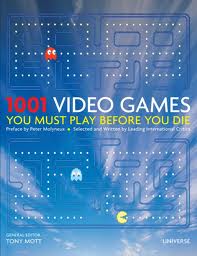 Another two books I recently picked up related for my 2D Platformer project is 1001 Video Games You Must Play Before You Die, selected and written by Leading International Critics. The books starts with reviews of games developed from the 1970's through the 2010's. The first featured game is Oregon Trail (1971) which of course many kids (now adults) first encountered at school on their Apple II machines. I really don't think there are 1001 games worth playing or should we even try? Since I am into retro programming I am going to try to check out all the games from the 1970's and 80's and leave the rest to those that enjoy the cutting edge games! I am not sure how much fun folks will have playing Pong today but it is a good programming exercise I intend to explore to get our feet wet with graphics programming in Java. The next game is BreakoutBoot Hill (1977). There is a MAME version we can play. I will certainly try my best to find it and try it out. The other games in the 1970's was played by most folks who were living and breathing and young in the 1970's - Combat (Atari), Space Invaders, Adventure, Asteroids, Galaxian, Lunar Lander. I can't believe there are not more games under the 1970's umbrella!!
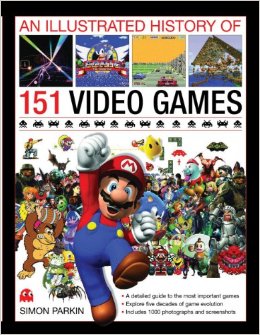 Another book I obtained to pair with this one was 151 Video Games by Simon Parkin. This is more of a coffee table size book with cool images and descriptions of the games we loved (or should have loved). The first game featured in the book is Computer Space a clone of the very first well known game invented - SpaceWar! I will feature as many games as I can scrounge up to play on my PC in the Game Review section of this website. My very first inclination (the bane of being a programmer) is to try to make my own version of a game rather than to just enjoy and play. I will add more notes about this book as I move along. I think this book contains a more reasonable list of books that are worth playing before you die. The pages are big, clean and full of great images of the games we loved. In addition, each game has a web site url you can use to visit to play or obtain more information about the game. Wonderful idea! In addition before it gets into a decade or generation of games there is a nice write up on the importance of the next generation of games, consoles and designers!

Instant Spring Tool Suite
 The final book I am featuring since the goal for today is to actually start and finish it this weekend is book Instant Spring Tool Suite. It is one of those small PACKT books I picked up during one of their $5 sales. I have been using STS for quite some time so I have two reason for finishing up this book - take a book off my "todo" list and maybe learn a bit more about the tool for future projects. For those who don't know STS is a Spring-based IDE based on Eclipse. It integrates Spring and Maven right into the tool. I will post notes and project suggestions on my programming page.
STS appears to the must use tool if you are developing backend Spring projects. The book covers topics that you must or should know how to do with the IDE
The final book I am featuring since the goal for today is to actually start and finish it this weekend is book Instant Spring Tool Suite. It is one of those small PACKT books I picked up during one of their $5 sales. I have been using STS for quite some time so I have two reason for finishing up this book - take a book off my "todo" list and maybe learn a bit more about the tool for future projects. For those who don't know STS is a Spring-based IDE based on Eclipse. It integrates Spring and Maven right into the tool. I will post notes and project suggestions on my programming page.
STS appears to the must use tool if you are developing backend Spring projects. The book covers topics that you must or should know how to do with the IDE
- * Creating simple Spring projects
- * Creating a Spring MVC project
- * Creating a multi-page web form using Spring Web Flow
- * Creating a Hibernate project
- * Accessing a non-relational data source
- * Creating a Spring Integration project
- * Connection a web service
- * Rapid application development with Spring Roo
As you can see the book covers popular Spring tools and frameworks using STS.

Slick2D Game Development
 This is a small (116 pages) book on Slick2D. The book builds a rather flawed game using the various features of Slick2D. It does a decent job of presenting the features of Slick2D that would make it useful in creating a 2D game in Java - cross-platform, state-based games, switching states, game workflow, rendering, drawing elements, user input, sound and music.
The editing was dreadful. I alone submitted over ten errata notes from typos, missing information to the fact that the final game has flawed. This book is not worth $29 in print nor $15 as an ebook. I was lucky enough to pick it up for $5 when PACKT was having one of their annual "All ebooks $5 sales!"
What I found most surprising was the fact that the book had several well respected technical editors. I later found out after posting a disheartening
1-star review on amazon.com that one of the technical reviews of the book did the same! My respect for that reviewer went up considerably.
I think you can pretty much get the same information in the book online and it will be more accurate and interesting.
3D Math Primer for Graphics and Game Development
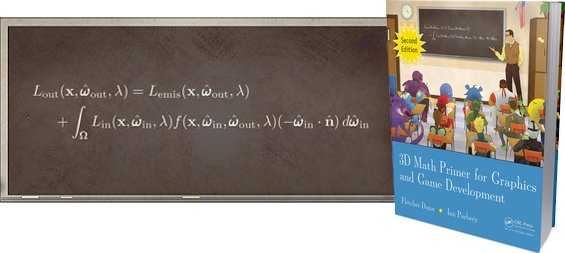 I am currently reading the book 3D Math Primer for Graphics and Game Development
by Fletcher Dunn and Ian Parberry, and find it to be one of the best math books I have ever read.
It is both funny and clear to read and oh yeah has the math you need to build 3D worlds.
It builds difficult to understand concepts for building 3D worlds in a logical and clear fashion.
The best part is that the authors have a great sense of humor that shines through on each and every page!
In addition, unlike many books in this category the authors do not assume the reader is some a math student
that already knows topics such as trigonometry or vectors.
The book clearly with many examples and illustrations builds on your knowledge and knows that one of the
key factors from programmers trying to build games is the development of a mental model that maps on to the real
world so that we map the math to physical or graphical entities.
Check out the following websites: 3dmathprimer
and gamemath.com. This is a great find. I will finally learn what a
quaternion is all about rather than just using it when I play around with Unity with no understanding!
The reason I picked this up is to improve my understanding of the equations being used in the video
tutorials on Java 3D game development I am following online (see programming page).
I am currently reading the book 3D Math Primer for Graphics and Game Development
by Fletcher Dunn and Ian Parberry, and find it to be one of the best math books I have ever read.
It is both funny and clear to read and oh yeah has the math you need to build 3D worlds.
It builds difficult to understand concepts for building 3D worlds in a logical and clear fashion.
The best part is that the authors have a great sense of humor that shines through on each and every page!
In addition, unlike many books in this category the authors do not assume the reader is some a math student
that already knows topics such as trigonometry or vectors.
The book clearly with many examples and illustrations builds on your knowledge and knows that one of the
key factors from programmers trying to build games is the development of a mental model that maps on to the real
world so that we map the math to physical or graphical entities.
Check out the following websites: 3dmathprimer
and gamemath.com. This is a great find. I will finally learn what a
quaternion is all about rather than just using it when I play around with Unity with no understanding!
The reason I picked this up is to improve my understanding of the equations being used in the video
tutorials on Java 3D game development I am following online (see programming page).
Game Graphics Programming
 Another book I am working on this spring is the book Game Graphics Programming by Allen Sherrod.
I am eager to get to the chapters on Ray Tracing, Programmable Shaders and Mapping Surfaces.
A final review of the book will need to wait until I have completed it but it appears to be well written but
does not cover the topics in depth or provide a complete set of code to actually use in your programs.
Another book I am working on this spring is the book Game Graphics Programming by Allen Sherrod.
I am eager to get to the chapters on Ray Tracing, Programmable Shaders and Mapping Surfaces.
A final review of the book will need to wait until I have completed it but it appears to be well written but
does not cover the topics in depth or provide a complete set of code to actually use in your programs.
|